
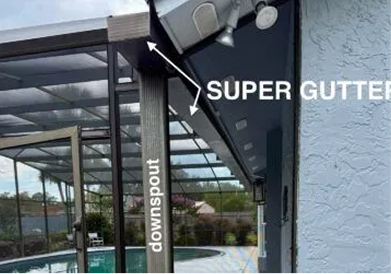
Screen enclosure framing is directly attached to, and supported by, a super gutter. Because of this structural connection, it is considered part of the screen enclosure, and typically installed by screen enclosure companies.
While Gecko Gutter doesn’t offer super gutters, we often get questions about it and want to share some information to help our customers.
Top 3 Things to Know
- Super gutters are located between a home’s roofline and pool or screen enclosure.
- They attach to the home and stabilize the screen frame.
- Super gutters redirect rainwater out of a pool area or patio deck.
How is Super Gutter Made?
Where is Super Gutter Found?
Super gutter is mounted directly against the fascia of your home, most commonly along the rear roofline. This solid connection to the roof ensures that it is well-supported and can consistently handle the weight of rainwater.
The screen enclosure connects to it on the other side, making it a structural element of the screen enclosure, supporting and stabilizing the screen framing.
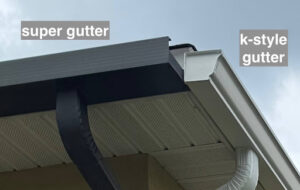
How Does Super Gutter Compare to K-Style Gutter?
Super gutter is far heavier and several times thicker than a standard K-style gutter. Because K-style gutters are designed only to carry water, they are made from thinner aluminum, typically ranging from 0.027 inches to 0.032 inches. Super gutter, which must also support screen framing, is over three times thicker, averaging between 0.090 inches and 0.125 inches.
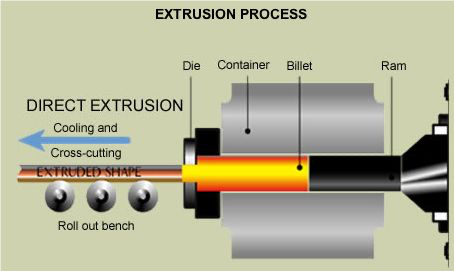
As mentioned above, a super gutter is created through a process known as extrusion instead of being rolled out. A large cylinder of aluminum (known as a billet or log) is heated to over 750º until soft, then pressed through a U-shaped hole called a die.
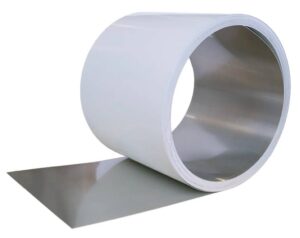
While K-gutter is somewhat flexible, and can be created on the job site, super gutter is not. It must be created elsewhere and delivered in whole pieces.
Super gutter is sold in:
- 24-foot pieces
- 36-foot pieces
- 40-foot pieces
As a result of the process, super gutters need to be cut and assembled on site.
*Note: Many customers call to ask why their super gutter endcaps are “too short.” This is because it is common for super gutter endcaps to be cut to half the height of the super gutter. This design ensures that if the gutter becomes clogged and overflows, the water will spill outside the screen enclosure, rather than inside it.
What Width Do You Recommend?
While super gutters come in two standard, off-the-shelf width options, five-inch or seven-inch, we strongly recommend the seven-inch option. The seven-inch width can handle much more rain volume and is far easier to clean out. (It is also possible to get 8-inch or larger from commercial companies. This would only be necessary in rare situations when it comes to residential use.)
It is important to remember that with a five-inch super gutter, about one inch is covered by the roof overhang extending into it and another half inch is lost to the outer lip of the super gutter itself. The end result is that a five-inch gutter has less than three and half inches of unobstructed area for rain to enter.
Therefore, seven-inch super gutter is the optimal choice for most situations. Best of all, the material cost difference between a five-inch super gutter and the seven-inch super gutter option is minimal.
As you can likely imagine, residential homes do not need a super gutter for their entire home. Instead, super gutter is designed to be strategically placed for maximum benefit.
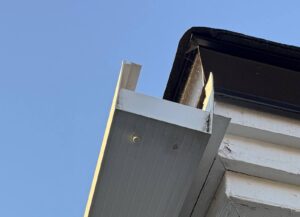
Super Gutter Recap
- They come in two standard width options: five inches and seven inches
- Designed for strategic placement
- Typically installed by pool enclosure companies